
Libido: In Hyper-mania, In Limerence
from my personal experiences

I wanted to write a short piece on my experiences with my libido in the separate states of hyper-mania and limerence, and show the contrast of how each influences and is influenced by that desire.
I had the privilege of working with a client a few years ago, who opened up to me about their experience of having an increased libido in manic periods. They were managing, what is now commonly called, Bipolar disorder, with contrasting and oscillating chapters of depression and mania. In the latter state, they would take themselves out to unfamiliar places, without fear, and seek the sexual attention of others. In the former state, they would be anxious to step outside of the house or pick up the telephone. I am incredibly grateful for them sharing their experiences and feelings around this aspect of their life with the condition, as it helped me and others to understand a significant additional driving factor for their behavioural choices. I am also grateful, because I had never really reflected on my own sexuality or libido as I have gone through, and been in, these different mental and physiological states.
Some definitions of libido:
the life instinct or, specifically, the sexual instinct.
sexual desire / sexual urges or drives
for Freudians, libido means the desire to ‘unite and bind’ with objects in the world.
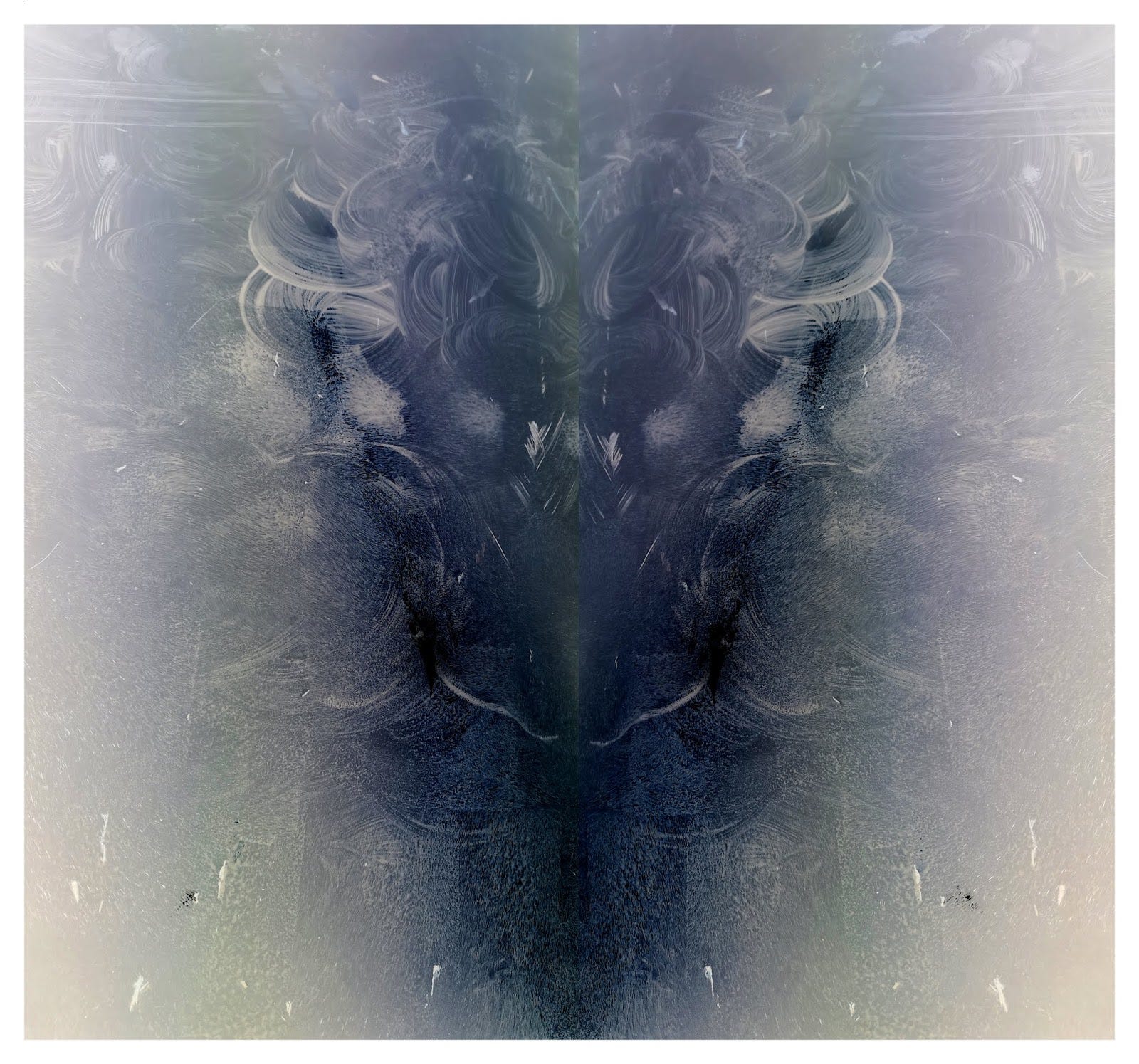
(Your Pleasure Is My Pleasure - III, c.h, 24th June 2018)
In terms of hyper-mania, I had considered some of its common effects. One, many experience, is the feeling that you are ultra resilient and powerful in an incredible way. Some feel they can stop the force of an oncoming train just by standing in front of it, for example. It is common to feel that you have such super powers. Although I do not believe I have had an experience strong enough to be considered mania (although I’m not sure), in hyper-mania, I have been able to recognise my fearlessness, and my extreme confidence to manage any situation in front of me, however complex, however much beyond my skillset or capacity. I have believed, with absolute confidence, that another’s feeling of happiness is in my power to create, for example, regardless of other things that might be affecting that person’s mood. I have noted that in these periods, too, I am more ‘output’ than balanced in my communicating with the world. It is true that I am experiencing everything in stronger way (sensations, emotions, thought processes etc.), but the possibility of my engaging in dialogue (spoken or otherwise) is reduced. I am not receiving the information in that way in this phase. I am going beyond a mechanism of doubt and scrutiny. I am riding ecstasy.
It follows, that I, too, in periods of hyper-mania, have a much more confident view of myself and how attractive I am, to myself and to others. In the same way, I feel I have capacity to improve every person’s experience in my environment. I feel my presence can only be celebrated. In certain situations, a person behaving in a manic way can be exciting and can boost an occasion or subvert social restrictions which are containing the collective life-force of all. In other environments, this behaviour is unwanted, upsetting and careless, and potentially dangerous for the safety of the person and anyone they come into contact with.
In hyper-mania, I feel the libido is carried more wildly towards wanting to make a connection, towards sex and sexual attraction. Everyone is beautiful. You are more beautiful than anyone I’ve ever known! This mental state is optimistic, unworried, creative, without boundaries. Metaphorically, it is like putting a blindfolded on a person, so they can only see aspects and shrouded light, but no clear forms. Then that person is guided into an unknown room, with their arms open, thinking everyone is their friend and wants to engage with them.
I worry in this state that I’ve not properly interpreted reactions or other forms of communication from others. As I am ashamed of my anxiety in steady phases (as it affects how I truly want to be by limiting and destabilising my intentions) I can ashamed of overly bashful and righteous behaviour in manic episodes after I’ve come down. Unlike with anxiety though, there are times in my hyper-manic state that I truly feel myself in the most honest way.
I worry that whilst in a hyper-manic state, my understanding of my own experience is confused, which is incredibly unnerving, as multiple interpretations of an event (perspectives of an event) might be true. I may have a very clear belief about the feeling of a certain interactions, but in this raised state, how much of the feeling is coloured by my internal excitement. And in following periods of time, it is hard to scrutinise; either in the remaining state of hyper-mania, or after the come-down. Memory is so strongly linked with emotions, and emotions are informed differently depending in which state I was experiencing them.What I have felt I have seen or witnessed in states of hyper-mania have been filed in my memory, which, when I have recalled and raised with others, a long time after the capture from the event, in a settled state, have sometimes been confusing and upsetting to that other person, who remembered that situation very differently.
I experience colours more brightly, sound more clearly and majestically in hyper-mania. The dimensions and possibilities of beauty are extended mightily. The world is more incredible and my ambition to adventure in all of it is ramped up, full steam ahead. As well as external sensations, thoughts, feelings and memories are also more vivid, important and trusted.
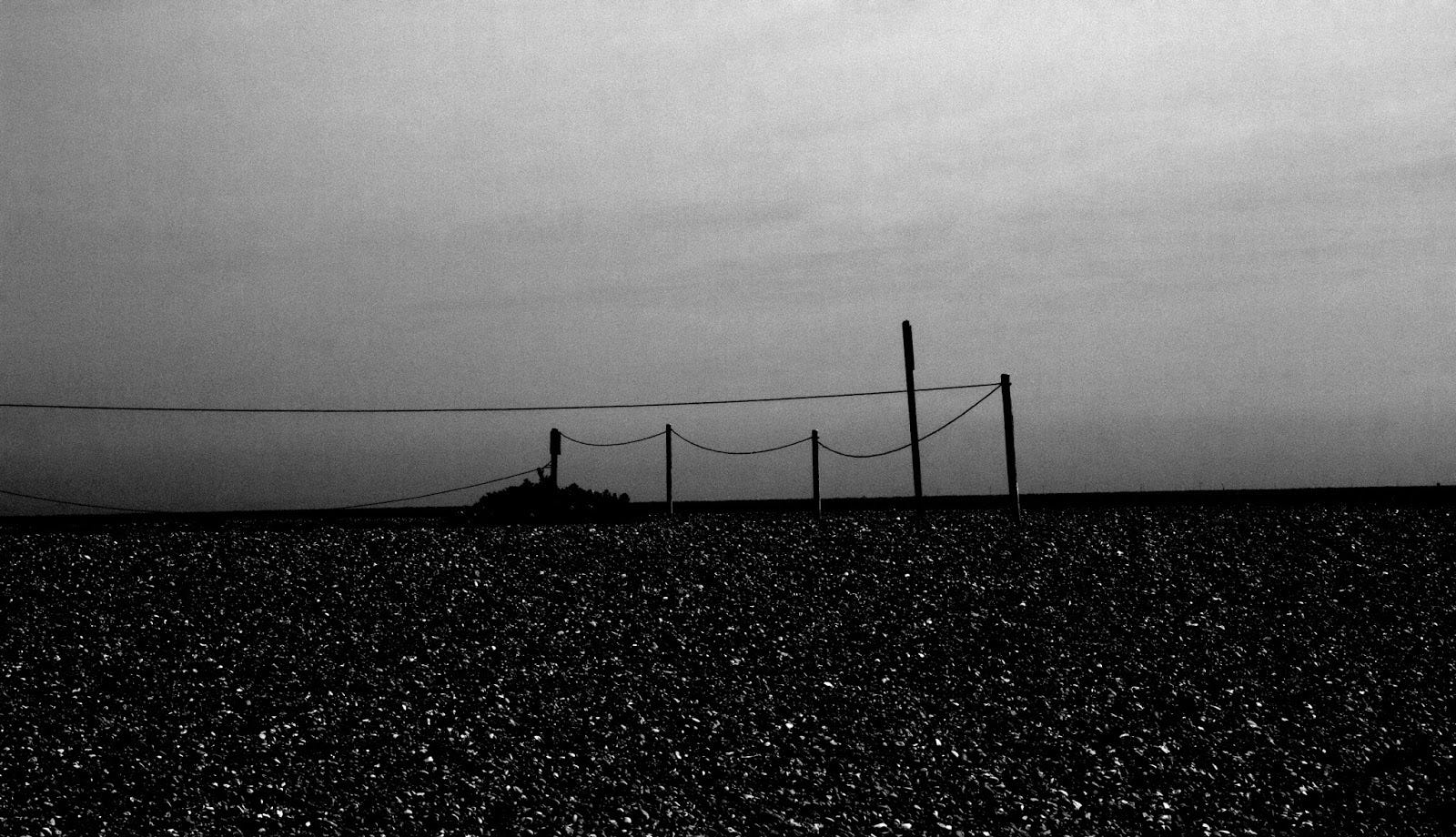
(Longing - c.h., 25th August 2017)
In contrast…
In limerence, my libido becomes suspended at a relatively low level. The state of limerence, for me, is one that cultivates a passivity in my physical form, whilst in the mind, it seems to motivate a hypnotic reverence and wonder at the person and their beauty. The objectification may take many forms away from physical beauty (i.e. objectifying their behaviour, their opinions, their experiences etc.) and it was because of this variety, I found what was happening harder to discern, because it felt like I was truly engaging fully with the person.
As I have learned more about limerence, I believe any sense of consideration and feeling for the person in the body and mind, although started by an external dynamic or reality (i.e., their aesthetics, behaviours, ways of communicating etc.), quickly flies from presence and reality, and indulges fixed states, imagination and uncritical superficiality. It is a plane which leaves the present for a fantasy journey/destination. I am incredibly ashamed of this, as for many years, I thought what I was doing was truly showing love and appreciation for the person I felt I was in love with, though unrealised. Although it is true that there were true parts to this appreciation - my mental health issues, which allows limerence to flourish, stopped me building a truer intimacy, and misdirected me to infatuation and suspension.
It is this nature (the mind removing its focus from reality) which leads me to believe that limerence is heavily connected with trauma/PTSD. In limerence, one’s safety is determined by what is managed in the mind. If one was present, that person would be vulnerable to interventions and factors outside of their control - rejection, the possibility of learning something which meant they would have to take action to reject another perhaps. In the mind, with ‘eyes closed’, denial, that person feels safe from having to truly engage with other people and objects in the world. Limerence in the mind, and ghostly bodies. Of course it is not as black and white as this. Depending on the situation and people, the ghostliness of a person may drift in and out, depending how authentic they feel they can be. In limerence, the thoughts of the mind are, to a large degree, safely managed by the person. I believe the more able a person is able to communicate their needs and feelings in an environment, the less chance of them experiencing limerence is. When a person is on their own, the less present that person is with their outer environment and sensations, the more chance there is to experience limerence in rumination.
I wonder now, therefore, that the reason that libido is repressed in this state is because the person does not really feel safe. On some subconscious level, the desire to ‘unite and bind’ is curtailed, and yet - limerence makes the bones and skin of the body buzz. The body is aroused, but demotivated to ‘engage’ with the person / situation that is making them feel like this. When I say ‘engage’, I mean be able to share; to be open, trusting, clear in communicating feelings and needs. I know when I have felt this, sadly, misinterpreting the forces at play, I have simultaneously wanted to in the company of the person making me feel this way, without the words or desire to develop anything further. To remain suspended, grateful to be at the base of the pedestal, a lucky life beneath the sky of stars. Now, as I consider it, I believe that any desire was, in fact, massively outmatched by the need to stay protected and hidden. I have been like a loyal dog, ready on command, but with no intention and ability to make a choice. It’s as if this condition, and the feelings, are the perfect ingredients for stuntedness, for sitting on the fence. For so many years, I interpreted this ‘buzz’, as an indication of strong (and positive) feelings for a person I thought I was ‘in love’ with. Over the last couple of years, when I consider this, I think it is more likely that it is linked to anxiety, and feeling unsafe.
The sensation didn’t feel unpleasant to me, and why it has avoided my suspicion for so long. Even now, with an enlightened understanding, it is something pleasant for me to work around, not unpleasant. Leave the heroin alone. Perhaps as this sensation was normalised to me in my pre-teen years, and I had mistakenly connected it to what people describe as ‘butterflies’, this is why I never questioned that I might be experiencing something different to other people. In fact, what people describe as ‘butterflies’ (the sensation of starting to notice that your feelings are developing for another person) matches the description of limerence quite well in many ways. Where limerence deviates, is that where the sensation of ‘butterflies’ usually motivates action in a person, which then changes those feelings into further ones, rooted in the improved, or otherwise, relationship between those people - limerence, continues to grow the flutter of butterflies to an overwhelming, all-consuming extent. This magnitude of emotion then feels too strong to speak. The possibility of loss from rejection feels too much. Ideas such as ‘the one’ come to mind. Before, I would see this strength of feeling as a positive, that my emotions were even more celebratory of this person I liked. Now, I feel that the reason my body diverts my emotions this way, is to curtail the possibility of true intimacy. At some point(s) historically, intimacy has had a traumatic outcome, and limerence is created to offer a substitutive experience, whilst trapping oneself from taking any action or making any progress with that relationship.
These are just initial muddled thoughts around libido, hyper-mania and limerence. There is much more detail to be written about around how the body reacts and responds to each state, and the situational consequences of either phenomenon.
Ultimately, through the lens of desire here, I think I conclude, broadly, that hyper-mania comes from a reactionary place of deep acceptance, as a release from the denial of the life force that depression has imprisoned. It is condition that tries to sustain life through extremities. It is wild and lacking in restriction, contemplation and measurement. It is not wise, but it is trying to connect.
Limerence, on the other hand, comes from a place of withdrawal from desire. It shames desire, and rationalises that shame by convincing the person experiencing it, that they are in the presence of unimaginable beauty - and that they cannot possibly connect on a level with the person who has stimulated their feelings. It is something for the addict that is missing connection, who does not have or cannot use the tools to bridge themselves to what they truly need. Here, have your heroin to pass the time. The feeling of limerence is the painting, book, or song, capturing something beautiful, but not that which inspired the art in the first place, the person who is alive and changing and mortal and can disappear and can leave you.
The more I look, the more I see these variable modes of mind as protective and/or desperate behaviours to counterbalance what it has been through before. The complexity of that journey makes it hard to recognise what has inspired the alterations of behaviour, and therefore, what might be needed to be put in place to restore a more predictable nature.
- c.h., 29th May 2025
(Small alterations made from original version published 26th May 2025)